Chapter 32: Build an Autonomous AI Sysadmin Agent with Claude Code
In this capstone chapter, you'll combine a custom Skill, an MCP server, and scheduled automation into a working sysadmin agent that triages alerts, runs diagnostics, and escalates to humans when needed.
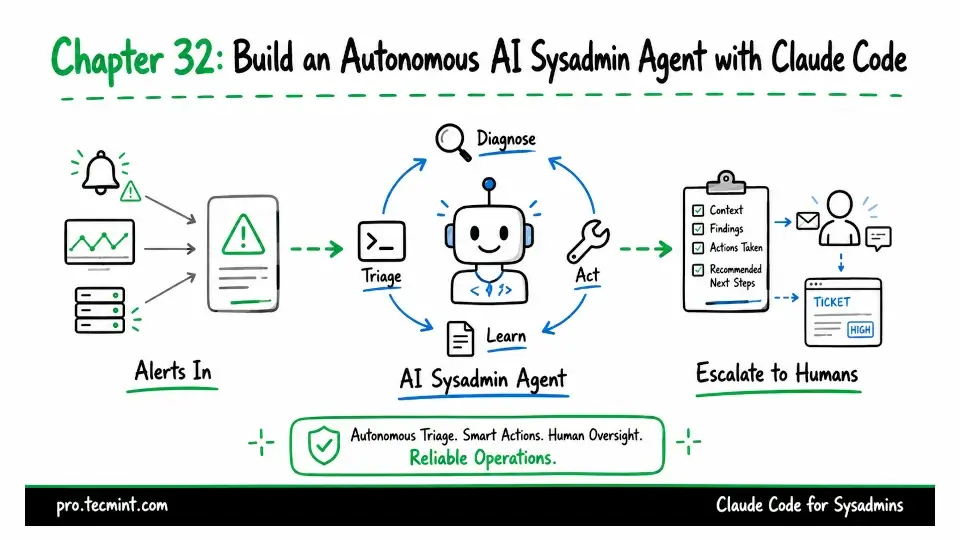
In the previous chapter, we completed Module 9 by implementing the compliance audit trail and completing the final pieces of operational accountability.
Now we are moving into Chapter 32, the final chapter of this course, where we bring together all the individual capabilities we built throughout the previous chapters into a complete sysadmin automation workflow.
Until this point, each chapter focused on building one specific capability, where you learned how to safely read and modify files, execute commands with the correct permissions, create Skills that capture repeatable administrative tasks, connect MCP servers that expose monitoring information, and run Claude Code in headless automation workflows.
But having these capabilities separately is different from combining them into a working operational system.
In this chapter, we will assemble these building blocks into a sysadmin agent that runs automatically on a server.
Instead of an administrator manually checking alerts, reviewing system state, and deciding the first response, the agent will perform the initial investigation, compare findings against defined runbooks, execute only approved safe actions, and escalate situations that require human judgment.
The workflow changes from manual investigation to controlled automation, where the agent runs on a schedule, collects monitoring information, evaluates active alerts, and follows predefined rules before deciding whether it can handle the situation or whether it needs administrator involvement.
By the end of this chapter, you will have a working sysadmin agent running through a systemd timer on your server.