Chapter 11: Learn IP Addressing Classes and Network Ranges
In this chapter, you'll learn how IP address classes divide the IPv4 space, what each class's range and default mask is, and how classful and classless addressing work in Linux networks.
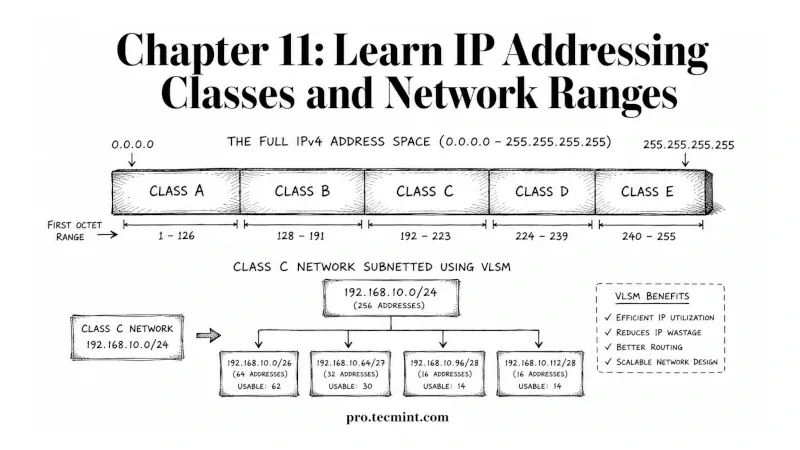
In Chapter 10 of the LFCA Certification Course, you built the binary arithmetic skills behind subnet calculations, worked through converting between binary and decimal, applied bitwise AND to extract network addresses, and verified your work with ipcalc, and that closed out the calculation side of networking theory.
This chapter covers IP address classes and addressing ranges, completing the networking theory section of Module 2 before it returns to the command line for practical troubleshooting.
It ties together the classful addressing you first saw in Chapter 9 with the binary skills from Chapter 10 to give you a complete picture of how the IPv4 address space is organized and why it's divided the way it is.
The System Administration Fundamentals domain (30%) of the LFCA exam tests both classful addressing and the transition to classless addressing, and questions in this area often combine class identification with subnet calculations, so the chapters you've just completed feed directly into this one.
Every concept in this chapter applies to any modern Linux distribution.