Chapter 10: Binary Basics for Linux Networking
In this chapter, you'll learn how to convert between binary and decimal, read binary octets, apply subnet masks, and work through network address calculations by hand.
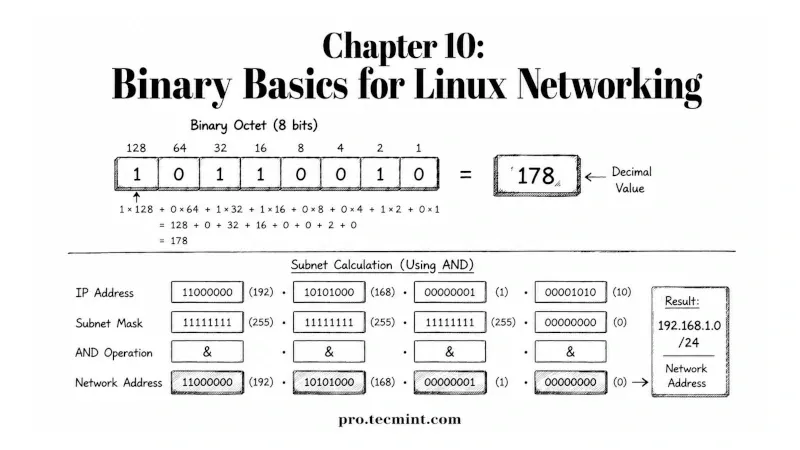
In Chapter 9 of the LFCA Certification Course, you learned how IPv4 addresses are structured, what subnet masks do, how CIDR notation works, and how to calculate network and broadcast addresses using bitwise AND operations.
If the binary portions of those worked examples felt unclear, this chapter is where that gets fully resolved.
This chapter explains how the binary number system works, how to convert between binary and decimal in both directions, how to read and write subnet masks in binary, and how to apply that knowledge to subnet calculations as expected in the LFCA exam.
Working through these examples by hand is one of the fastest ways to make subnetting feel predictable rather than guesswork.
This topic is tested in the System Administration Fundamentals domain (30%), and binary conversion questions can appear on the exam both directly (for example, “What is 11000000 in decimal?”) and indirectly inside subnet calculation questions, where you need to apply a non-octet-aligned subnet mask correctly.
All the concepts covered in this chapter apply across modern Linux distributions, so the knowledge is practical and not limited to the exam.