Chapter 51: Centralized SSH Key Management
In this chapter, you'll learn how to build a centralized SSH key management system, automate key distribution across server fleets, and deprovision access when team members leave.
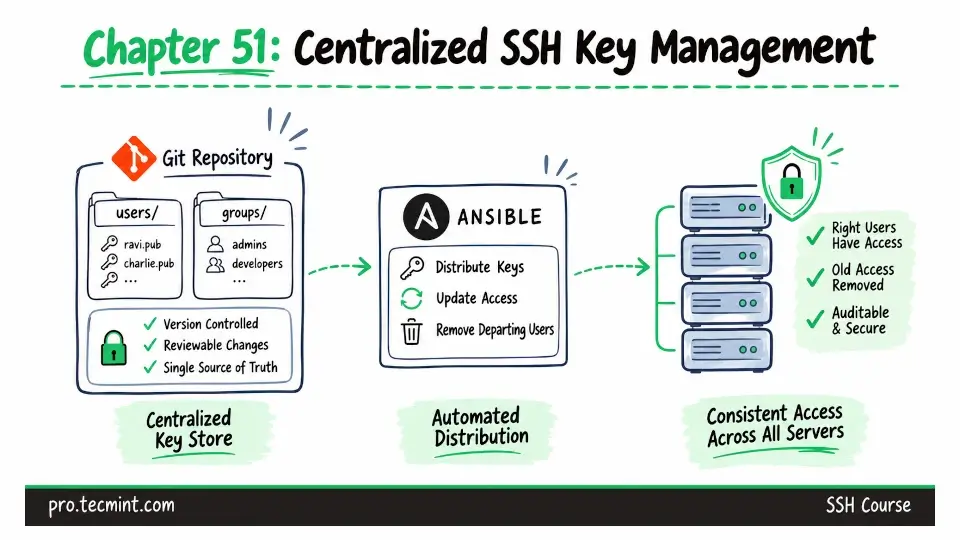
In the previous chapter, you learned how SSH Certificate Authorities (CAs) work, how to issue short-lived user and host certificates, and how certificate-based authentication removes the need to manage authorized_keys files on every server. For organizations with a mature SSH infrastructure, this is the long-term goal.
However, most organizations still rely on traditional SSH keys, have existing infrastructure that is built around them, or operate in a mixed environment where both traditional keys and SSH certificates are used.
Regardless of the setup, they all face the same challenge: how do you manage SSH key access across a large number of servers without losing track of who has access, where their keys are installed, and whether old keys are removed when people leave?
A centralized key management approach addresses this challenge. It provides a single, authoritative source for tracking, distributing, updating, and removing SSH keys across the environment.
Even if your long-term goal is to migrate to certificate-based authentication, centralized key management provides the structure and operational discipline needed to manage existing SSH keys safely and consistently during the transition.