Chapter 28: Open Source Software and Licensing
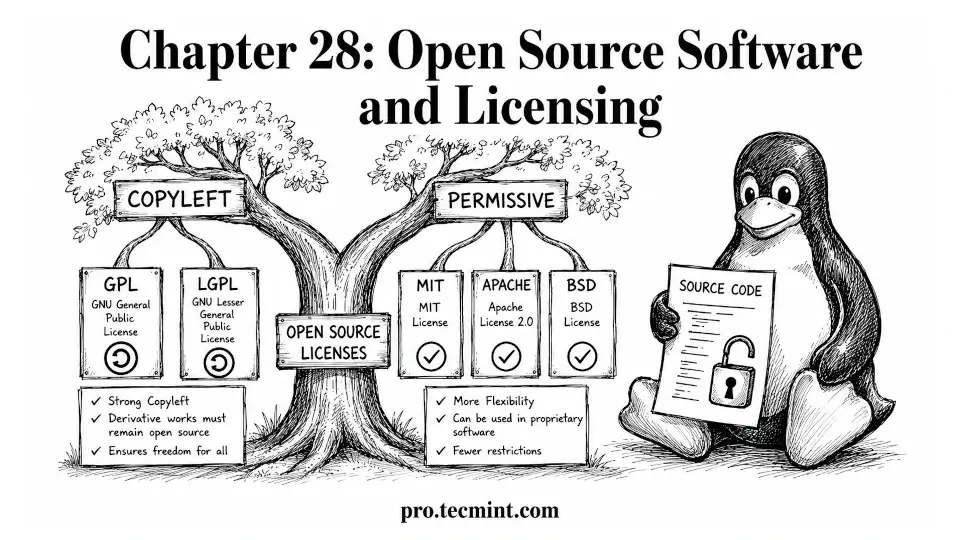
In this chapter, you'll learn how open-source licenses work, the difference between copyleft and permissive licenses, what GPL, MIT, Apache, and BSD require, and how licensing affects Linux distributions and packages.
In the previous chapter, Chapter 27, you learned how project requirements are gathered, documented, and validated.
You also saw how clear, well-defined requirements help ensure that a project delivers what users and stakeholders actually need.
In this final chapter, you'll learn about open-source software and licensing. We'll explain what open source really means, why software licenses matter, the main license types covered in the LFCA exam, and what rights and responsibilities each license gives to people who use, modify, or distribute software.
You'll also see how software licensing is connected to the Linux distributions, applications, and open-source tools you've been using throughout this course.
Every Linux system includes thousands of open-source packages, each released under a specific license, so understanding these licenses is an important part of working with Linux.
Open-source licensing is part of the IT Project Management Fundamentals domain (10%) of the LFCA exam.
The exam expects you to recognize common open-source licenses, understand the difference between copyleft and permissive licenses, and know the basic obligations that come with each.
By the end of this chapter, you'll have a practical understanding of how open-source licensing works and why it's an essential part of using and managing Linux systems.